Python激活函数
    import torch
    import torchvision.models as models
    import torchvision.transforms as transforms
    from PIL import Image
    import inspect

    # 加载预训练的 VGG16 模型
    model = models.vgg16(weights=models.VGG16_Weights.DEFAULT)
    model.eval()  # 设置为评估模式

    print("VGG16 文档:")
    print(inspect.getdoc(models.vgg16))
    print("\n" + "="*60 + "\n")

    # 分析每一层的参数量
    def analyze_vgg16_params(model):
        total_params = 0
        print(f"{'Layer Name':<20} {'Type':<15} {'Parameters':<12} {'Shape':<25} {'Description':<20}")
        print("-" * 100)

        # 分析特征提取部分 (卷积层)
        features_params = 0
        for i, layer in enumerate(model.features):
            if isinstance(layer, torch.nn.Conv2d):
                layer_params = sum(p.numel() for p in layer.parameters())
                features_params += layer_params
                total_params += layer_params
                print(f"{f'features[{i}]':<20} {'Conv2d':<15} {layer_params:<12} {str(tuple(layer.weight.shape)):<25} {f'卷积层 {i}'}")
            elif isinstance(layer, torch.nn.MaxPool2d):
                print(f"{f'features[{i}]':<20} {'MaxPool2d':<15} {'0':<12} {'-':<25} {'最大池化层'}")

        print(f"{'features_total':<20} {'-':<15} {features_params:<12} {'-':<25} {'特征提取部分总参数量'}")

        print("-" * 100)

        # 分析分类器部分 (全连接层)
        classifier_params = 0
        for i, layer in enumerate(model.classifier):
            if isinstance(layer, torch.nn.Linear):
                layer_params = sum(p.numel() for p in layer.parameters())
                classifier_params += layer_params
                total_params += layer_params
                if i == 0:
                    desc = "第一个全连接层(4096)"
                elif i == 3:
                    desc = "第二个全连接层(4096)"
                elif i == 6:
                    desc = "分类层(1000类)"
                else:
                    desc = "全连接层"
                print(f"{f'classifier[{i}]':<20} {'Linear':<15} {layer_params:<12} {str(tuple(layer.weight.shape)):<25} {desc}")
            elif isinstance(layer, torch.nn.Dropout):
                print(f"{f'classifier[{i}]':<20} {'Dropout':<15} {'0':<12} {'-':<25} {'Dropout层'}")
            elif isinstance(layer, torch.nn.ReLU):
                print(f"{f'classifier[{i}]':<20} {'ReLU':<15} {'0':<12} {'-':<25} {'激活函数'}")

        print(f"{'classifier_total':<20} {'-':<15} {classifier_params:<12} {'-':<25} {'分类器部分总参数量'}")

        print("-" * 100)
        print(f"{'TOTAL':<20} {'-':<15} {total_params:<12} {'-':<25} {'总参数量'}")

        return total_params

    # 执行分析
    total_params = analyze_vgg16_params(model)

    print("\n" + "="*60)
    print("VGG16 结构详细解释:")
    print("="*60)

    print("\n1. 网络结构概述:")
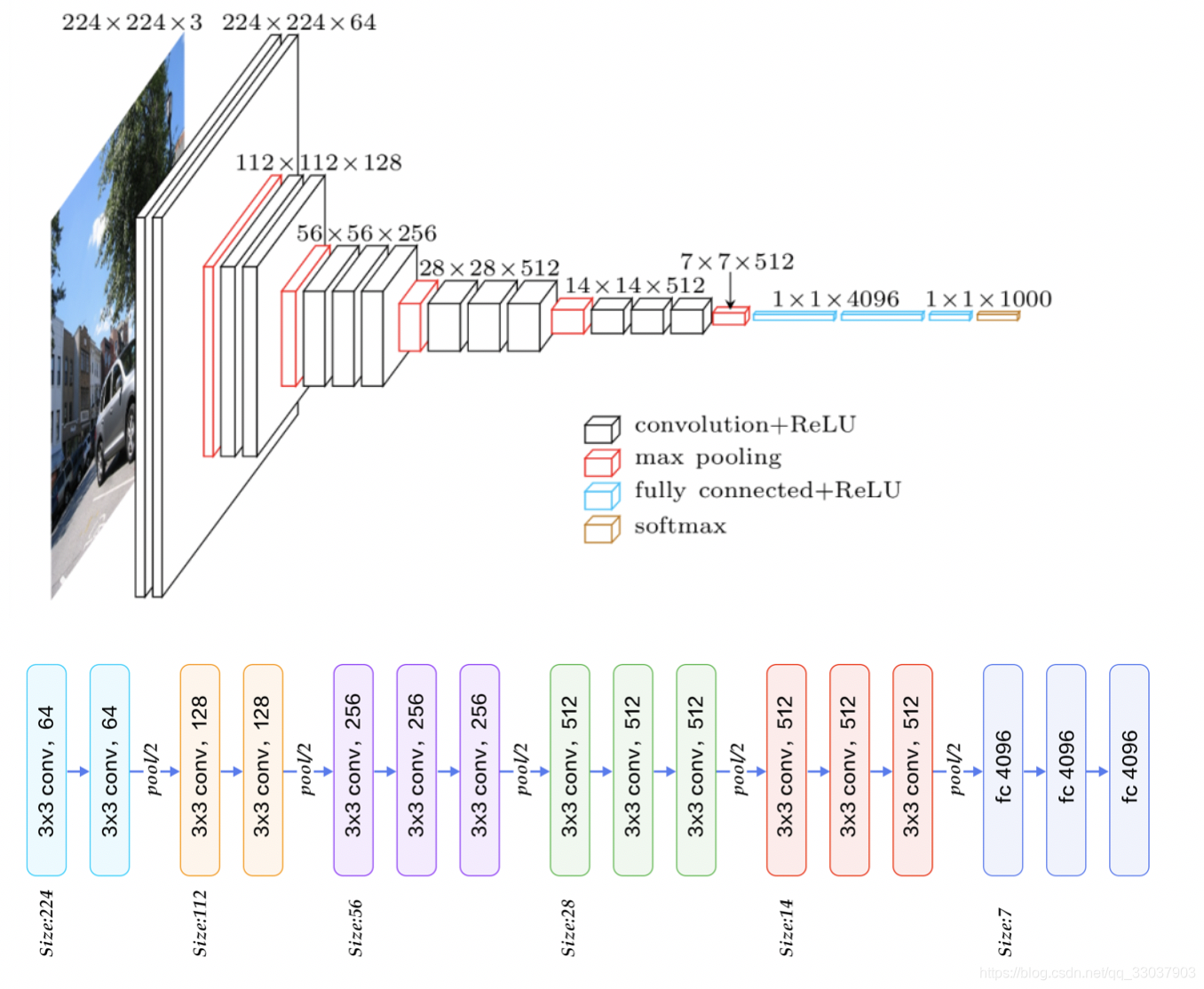
    print("   - VGG16 包含 16 个带权重的层(13个卷积层 + 3个全连接层)")
    print("   - 总参数量约为 138M")
    print("   - 使用小尺寸3x3卷积核堆叠代替大卷积核")

    print("\n2. 特征提取部分 (features):")
    print("   - 包含13个卷积层和5个最大池化层")
    print("   - 卷积层配置: 64-64-128-128-256-256-256-512-512-512-512-512-512")
    print("   - 每经过一个池化层,特征图尺寸减半,通道数翻倍")
    print("   - 所有卷积层都使用3x3卷积核,步长=1,填充=1")

    print("\n3. 分类器部分 (classifier):")
    print("   - 包含3个全连接层")
    print("   - 第一全连接层: 25088 → 4096")
    print("   - 第二全连接层: 4096 → 4096")
    print("   - 第三全连接层: 4096 → 1000 (分类输出)")
    print("   - 全连接层参数量占总参数的约90%")

    print("\n4. 参数量分布特点:")
    print("   - 全连接层参数极其庞大(约1.2亿参数)")
    print("   - 第一个全连接层就有约1亿参数")
    print("   - 卷积层参数相对较少(约1.5千万参数)")

    print("\n5. 与ResNet-18对比:")
    print("   - VGG16参数量(138M) vs ResNet-18(11.7M): 约12倍")
    print("   - VGG16层数更少但参数更多(主要在全连接层)")
    print("   - ResNet使用全局平均池化大幅减少全连接参数")

    print("\n6. 设计优缺点:")
    print("   - 优点: 结构简单统一,性能优秀")
    print("   - 缺点: 参数量巨大,计算成本高")
    print("   - 改进: 后来的网络多用全局平均池化替代全连接层")
    运行结果
    VGG16 文档:
    VGG-16 from `Very Deep Convolutional Networks for Large-Scale Image Recognition `__.

    Args:
        weights (:class:`~torchvision.models.VGG16_Weights`, optional): The
            pretrained weights to use. See
            :class:`~torchvision.models.VGG16_Weights` below for
            more details, and possible values. By default, no pre-trained
            weights are used.
        progress (bool, optional): If True, displays a progress bar of the
            download to stderr. Default is True.
        **kwargs: parameters passed to the ``torchvision.models.vgg.VGG``
            base class. Please refer to the `source code
            `_
            for more details about this class.

    .. autoclass:: torchvision.models.VGG16_Weights
        :members:

    ============================================================

    Layer Name           Type            Parameters   Shape                     Description
    ----------------------------------------------------------------------------------------------------
    features[0]          Conv2d          1792         (64, 3, 3, 3)             卷积层 0
    features[2]          Conv2d          36928        (64, 64, 3, 3)            卷积层 2
    features[4]          MaxPool2d       0            -                         最大池化层
    features[5]          Conv2d          73856        (128, 64, 3, 3)           卷积层 5
    features[7]          Conv2d          147584       (128, 128, 3, 3)          卷积层 7
    features[9]          MaxPool2d       0            -                         最大池化层
    features[10]         Conv2d          295168       (256, 128, 3, 3)          卷积层 10
    features[12]         Conv2d          590080       (256, 256, 3, 3)          卷积层 12
    features[14]         Conv2d          590080       (256, 256, 3, 3)          卷积层 14
    features[16]         MaxPool2d       0            -                         最大池化层
    features[17]         Conv2d          1180160      (512, 256, 3, 3)          卷积层 17
    features[19]         Conv2d          2359808      (512, 512, 3, 3)          卷积层 19
    features[21]         Conv2d          2359808      (512, 512, 3, 3)          卷积层 21
    features[23]         MaxPool2d       0            -                         最大池化层
    features[24]         Conv2d          2359808      (512, 512, 3, 3)          卷积层 24
    features[26]         Conv2d          2359808      (512, 512, 3, 3)          卷积层 26
    features[28]         Conv2d          2359808      (512, 512, 3, 3)          卷积层 28
    features[30]         MaxPool2d       0            -                         最大池化层
    features_total       -               14714688     -                         特征提取部分总参数量
    ----------------------------------------------------------------------------------------------------
    classifier[0]        Linear          102764544    (4096, 25088)             第一个全连接层(4096)
    classifier[1]        ReLU            0            -                         激活函数
    classifier[2]        Dropout         0            -                         Dropout层
    classifier[3]        Linear          16781312     (4096, 4096)              第二个全连接层(4096)
    classifier[4]        ReLU            0            -                         激活函数
    classifier[5]        Dropout         0            -                         Dropout层
    classifier[6]        Linear          4097000      (1000, 4096)              分类层(1000类)
    classifier_total     -               123642856    -                         分类器部分总参数量
    ----------------------------------------------------------------------------------------------------
    TOTAL                -               138357544    -                         总参数量

    ============================================================
    VGG16 结构详细解释:
    ============================================================

    1. 网络结构概述:
       - VGG16 包含 16 个带权重的层(13个卷积层 + 3个全连接层)
       - 总参数量约为 138M
       - 使用小尺寸3x3卷积核堆叠代替大卷积核

    2. 特征提取部分 (features):
       - 包含13个卷积层和5个最大池化层
       - 卷积层配置: 64-64-128-128-256-256-256-512-512-512-512-512-512
       - 每经过一个池化层,特征图尺寸减半,通道数翻倍
       - 所有卷积层都使用3x3卷积核,步长=1,填充=1

    3. 分类器部分 (classifier):
       - 包含3个全连接层
       - 第一全连接层: 25088 → 4096
       - 第二全连接层: 4096 → 4096
       - 第三全连接层: 4096 → 1000 (分类输出)
       - 全连接层参数量占总参数的约90%

    4. 参数量分布特点:
       - 全连接层参数极其庞大(约1.2亿参数)
       - 第一个全连接层就有约1亿参数
       - 卷积层参数相对较少(约1.5千万参数)

    5. 与ResNet-18对比:
       - VGG16参数量(138M) vs ResNet-18(11.7M): 约12倍
       - VGG16层数更少但参数更多(主要在全连接层)
       - ResNet使用全局平均池化大幅减少全连接参数

    6. 设计优缺点:
       - 优点: 结构简单统一,性能优秀
       - 缺点: 参数量巨大,计算成本高
       - 改进: 后来的网络多用全局平均池化替代全连接层